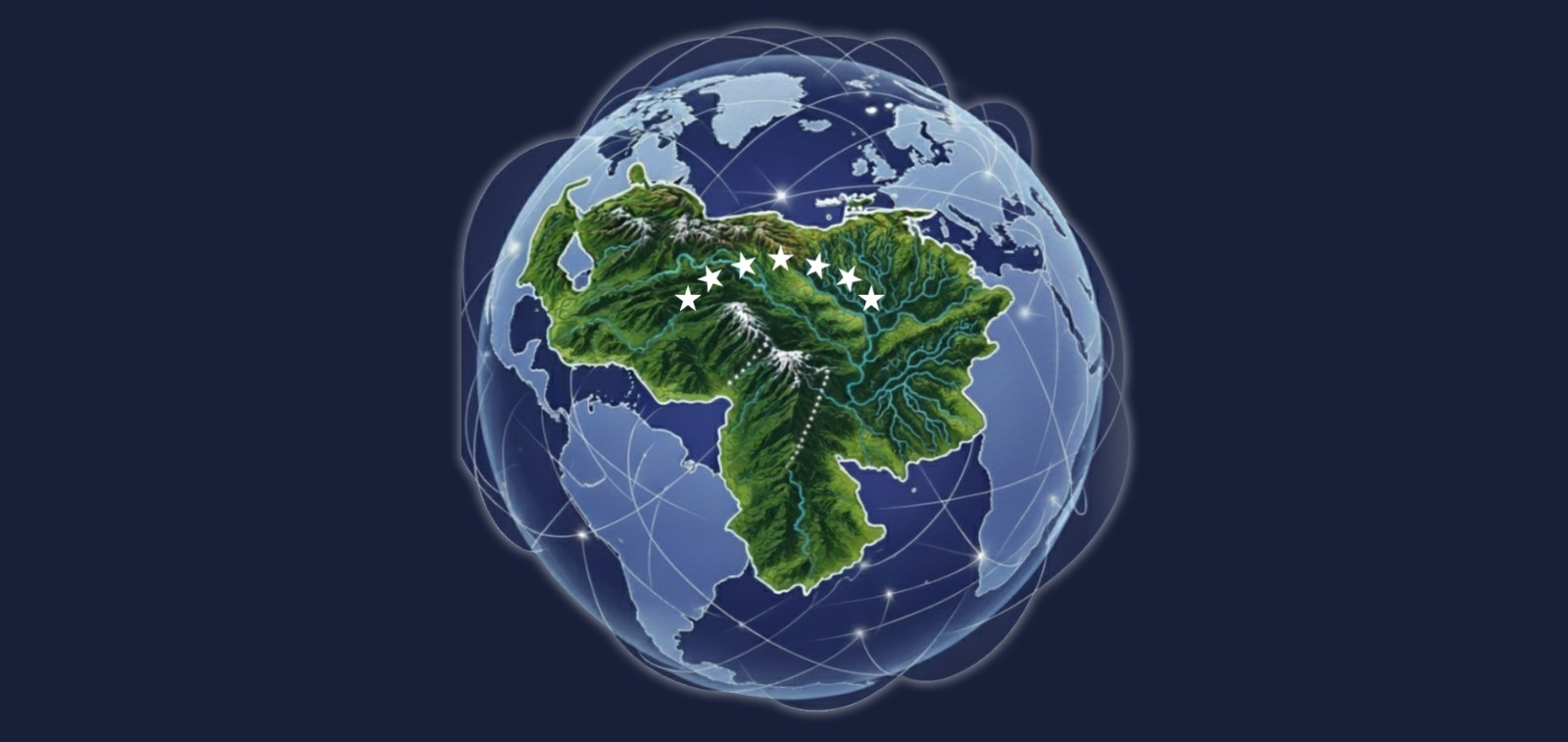
Image Credit: AI-generated by Irina Rodriguez.
Building a Professional StoryMap wasn’t just a design exercise; it was a strategic act of repositioning.
The project started with a practical goal: I needed a portfolio that truly reflected two decades of diverse experience in Geographic Information Systems (GIS). However, as I curated the content, the project evolved into something deeper. It became a spatial narrative connecting my local roots in Venezuela to a global practice in geospatial strategy.
For years, I faced the invisible portfolio problem familiar to many of us: my best work was hidden behind corporate firewalls and confidentiality agreements. I had no screenshots, public dashboards, or visible legacy.
Consequently, I realized that if I couldn’t show my projects, I had to show my process.
This article takes you behind the scenes of how I built “From Local Roots to Global Geospatial Impact,” the narrative structure I used, and how you can apply this framework to define your own professional identity.
Why a Narrative Portfolio?
A static résumé lists what you did. Conversely, a StoryMap explains why it mattered.
I wanted a space to connect technical expertise with strategic perspective. To do this, I treated my career not as a chronological list, but as a map with distinct territories.
The resulting StoryMap unfolds across six concise chapters. These aren’t random; rather, they correspond to the specific strategic prompts I now use to help clients uncover their own value proposition.
1. The Origin: Roots in Geography
Every story needs an anchor. Specifically, mine begins at the Universidad Central de Venezuela. The turning point wasn’t a class, but an event: the 1999 Vargas tragedy. Seeing that disaster represented cartographically taught me that geography isn’t just about describing the world—it is about managing risk and understanding change.
(Strategic Insight: Identify the moment your job became a calling.)
2. The Foundation: First Footprints
Initially, my early roles at a global GIS company and environmental consulting firms were about mastering the tools. However, the narrative here focuses on the “Aha!” moment: realizing that teaching the logic behind the software was more valuable than teaching the buttons.
3. Deepening Expertise: The Language of GIS
Pursuing my Master’s in Girona confirmed a hypothesis I had formed in the field: GIS is not just technology; it is a management discipline. Therefore, this chapter positions education not just as a credential, but as a shift in mindset.
4. The Challenge: Public Sector & Infrastructure
In fact, real-world data is messy. Leading the cleanup of fragmented data for agricultural infrastructure taught me that before you can have “smart” maps, you need dependable systems. This chapter highlights leadership over technical perfection.
5. Resilience: The Pivot Points
Naturally, my career path wasn’t a straight line. It included a hiatus due to a socio-political crisis, a handmade product business, and a return to the field through an environmental NGO.
In a standard CV, gaps are liabilities. In contrast, in a StoryMap, they are evidence of resilience and adaptability—transferable skills that define my consulting approach today.
6. The Strategy: Enterprise Alignment
The final professional chapter focuses on my work in the US energy and telecom sectors. This is where the narrative shifts within the evolving landscape of GIS roles, helping organizations move from chaotic data to structured geospatial intelligence.
From Personal Project to Methodology
Building this portfolio revealed a gap in our industry. We have excellent technical manuals, but very few resources on how to communicate our value.
This realization led me to develop a two-part ecosystem for GIS professionals:
- The “How”: I created Map Your Career: A Guide to Creating a Professional StoryMap, a free resource that covers the technical steps of using ArcGIS StoryMaps to build your portfolio.
- The “What”: I realized that a beautiful map is useless without a compelling story. Specifically, this led to GIS Professional Story: a quick self-discovery guide designed to help you answer the hard questions—your “aha” moments, your story gap, and your unique value proposition.
My Framework for Impactful Storytelling
Whether I am consulting for a client or designing a personal project, my voice is clear, peer-to-peer, and human. My advice to you is to keep it simple:
- Speak to the reader as a peer.
- Translate technical complexity into business value.
- End with purpose.
Ultimately, maps are not only about where things are. They are about why they matter.
The Next Strategic Step
If you are ready to build your own, start with the free guide Map Your Career. Furthermore, if you have the technical skills, explore GIS Professional Story to find your narrative voice.
For those seeking a deeper strategic audit of their professional territory, I invite you to a GIS Clarity Session. We will move beyond the tools to define the terms of engagement that position you as a strategic leader in the field.
🧭 Continue Reading