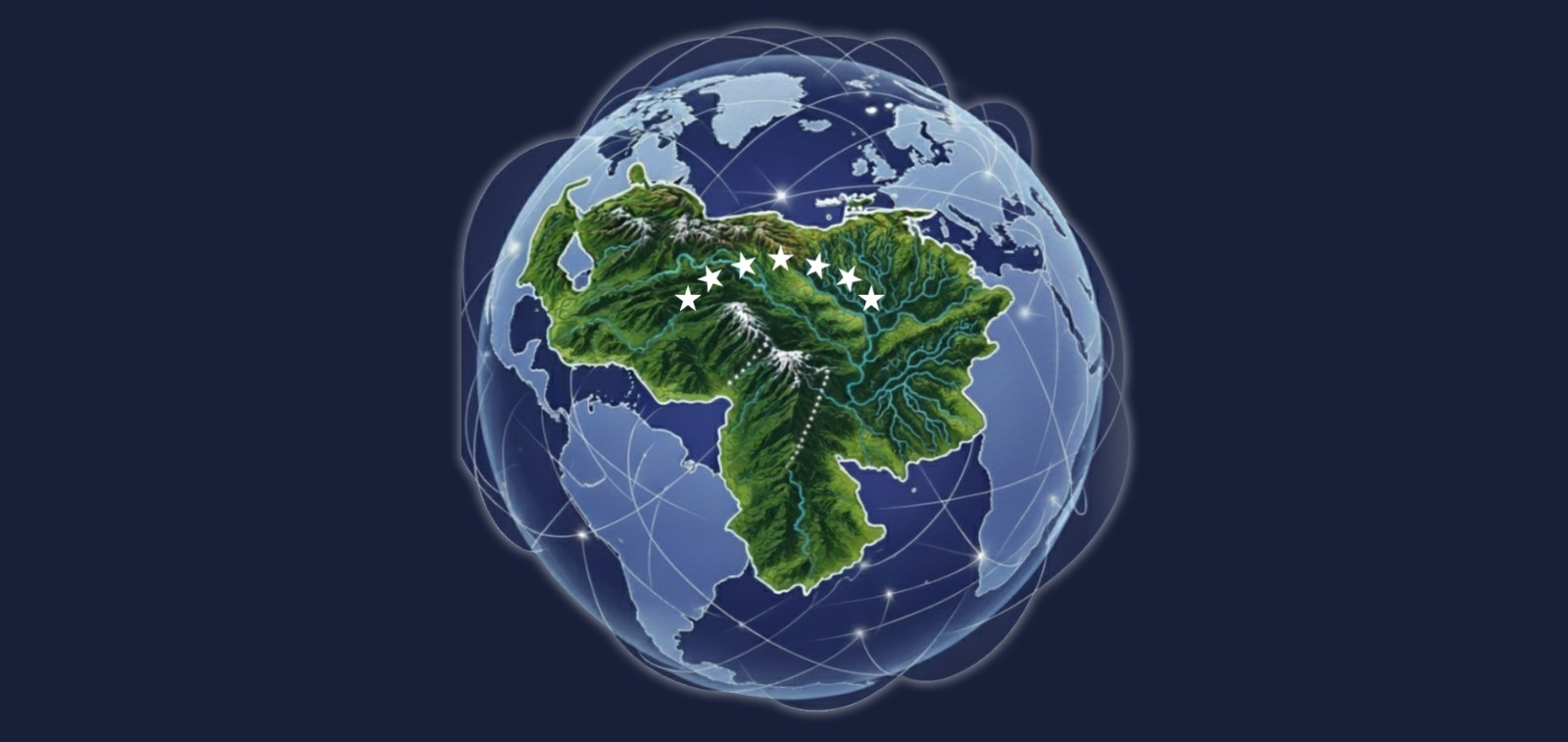
Image Credit: AI Generated by Irina Rodriguez. Image via Gemini.
A Living Discipline
Today is Geographer’s Day in my home country, Venezuela. It’s a perfect moment to revisit a simple truth: Geography is not static. It evolves as the world does, and as our ways of perceiving it expand into new methodologies and new territories of meaning. Tracing that evolution is not nostalgia.
It’s a way to understand the depth, relevance, and responsibility of geography in the world we now inhabit.
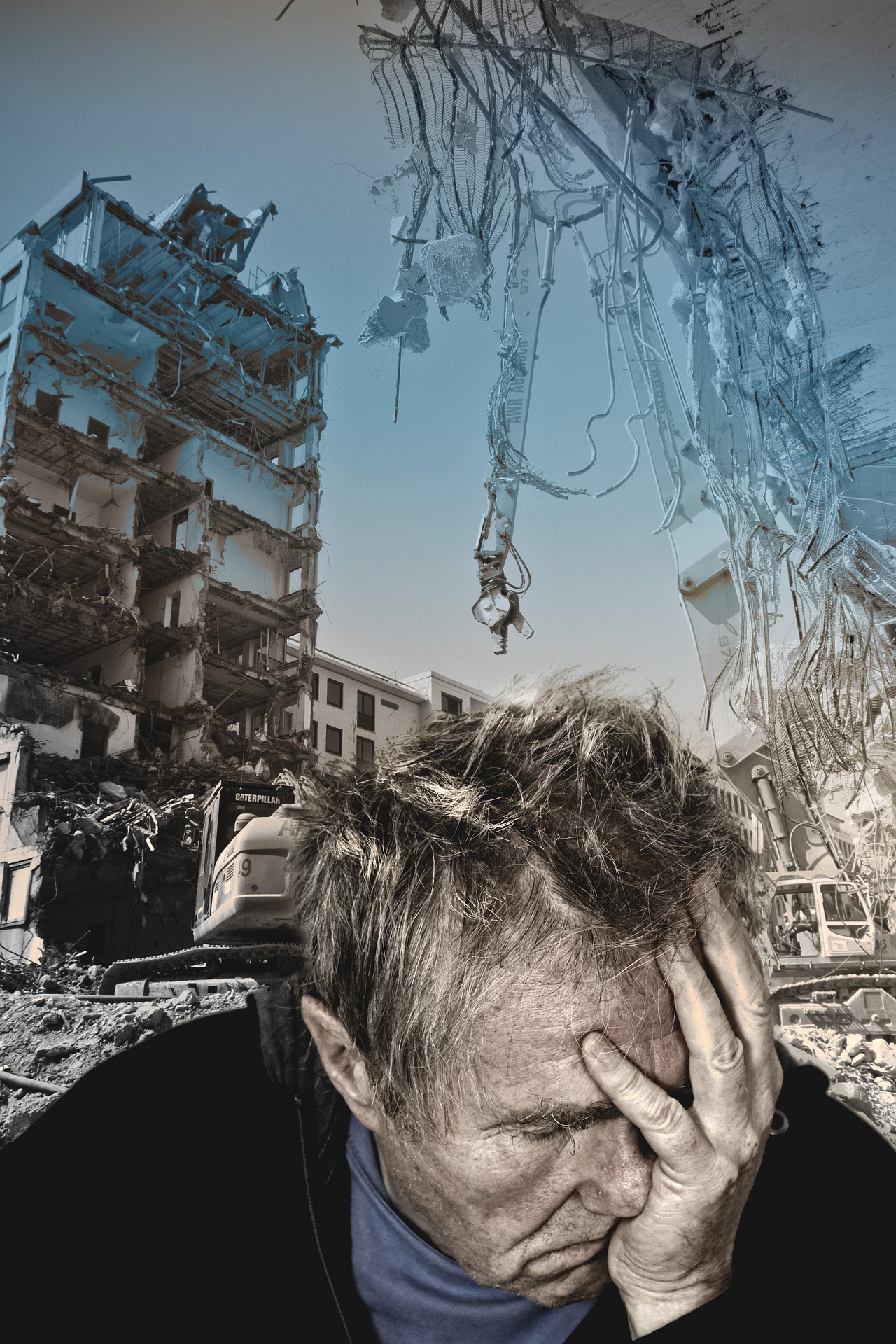
1. Reading the Earth
In its origins, geography was descriptive and physical.
Geographers charted the natural world as mountains, rivers, climates, regions to represent and understand Earth’s surface.
This tradition was shaped by:
- Alexander von Humboldt, whose empirical approach grounded physical geography.
- Carl Ritter, who gave early structure to geographic thought.
In that period, geography was intertwined with exploration, colonial expansion, and imperial knowledge production.
The core question was: What is this place like?
It served imperial, military, and scientific needs, taking shape inside natural science curricula and state cartographic institutions.
2. Human Geography
By the late 19th and early 20th centuries, geography expanded to include social, cultural, and economic dimensions.
It was no longer enough to describe terrain; geographers began asking how humans inhabit and organize space, and how they assign meaning to it.
This shift brought influential schools such as:
- The French School, led by Vidal de la Blache (genre de vie, human–environment relations).
- The German School, influenced by Ratzel (state growth, geopolitical interpretations).
New questions emerged:
- How do people live in this place?
- What spatial patterns arise from cultural and economic life?
This was the era of regional geography, cultural landscapes, and human-environment interaction — foundations for modern spatial thinking.
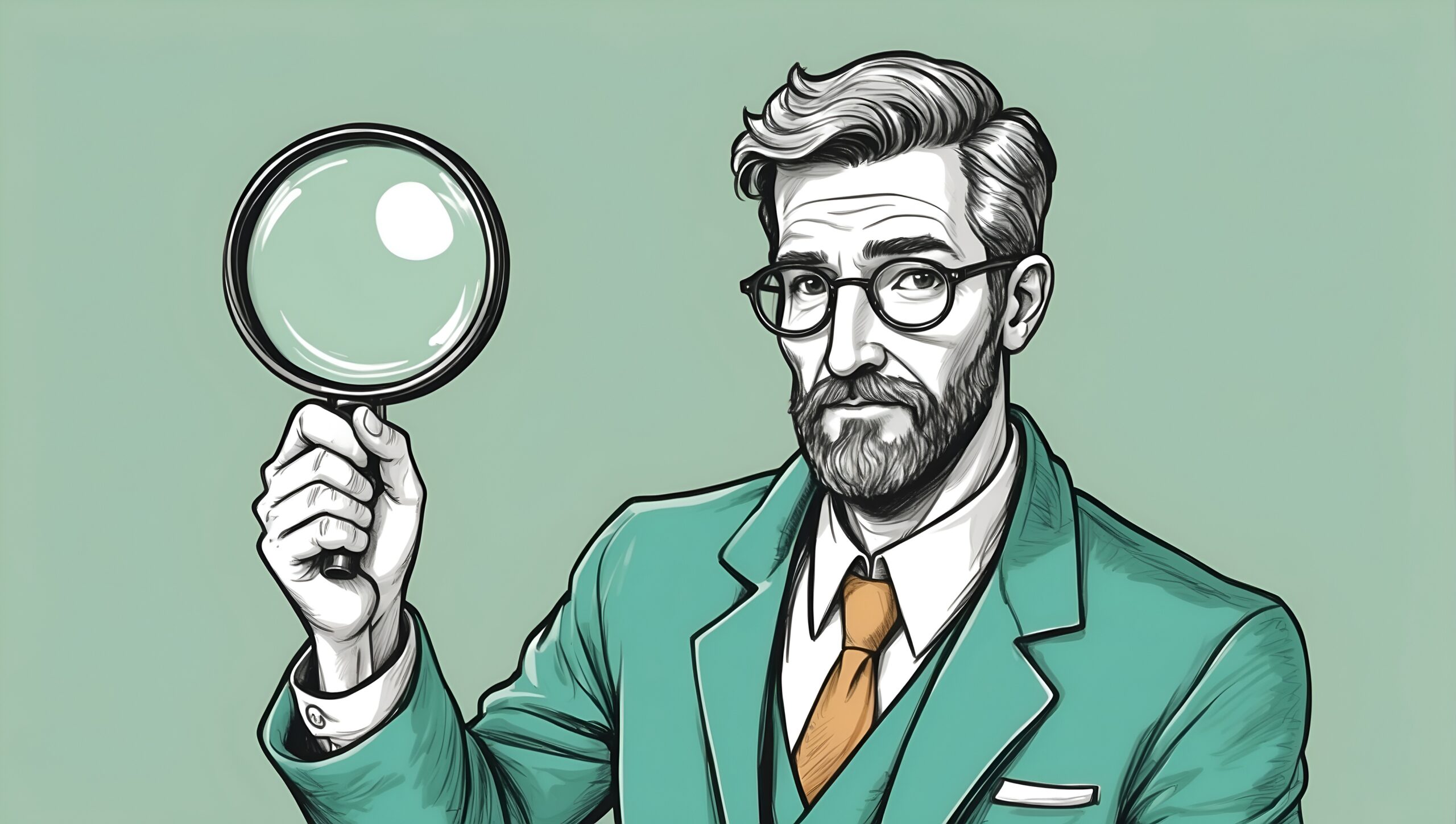
3. Quantitative and Critical Geography
By the mid-20th century, geography underwent a methodological transformation of the The Quantitative Revolution as Statistical models, spatial analysis, and hypothesis testing positioned geography closer to “scientific” paradigms; or Critical Geography a countercurrent that emerged grounded in Marxist, feminist, and postcolonial theory.
It challenged geography to confront inequality, capitalism, and spatial injustice.
Figures like David Harvey, Doreen Massey, and Edward Soja asked:
- Who produces space?
- Who benefits from spatial arrangements?
- What power relations shape maps and borders?
This era also saw the rise of GIS, which brought powerful spatial data into the field while raising ethical questions about surveillance, representation, and access.
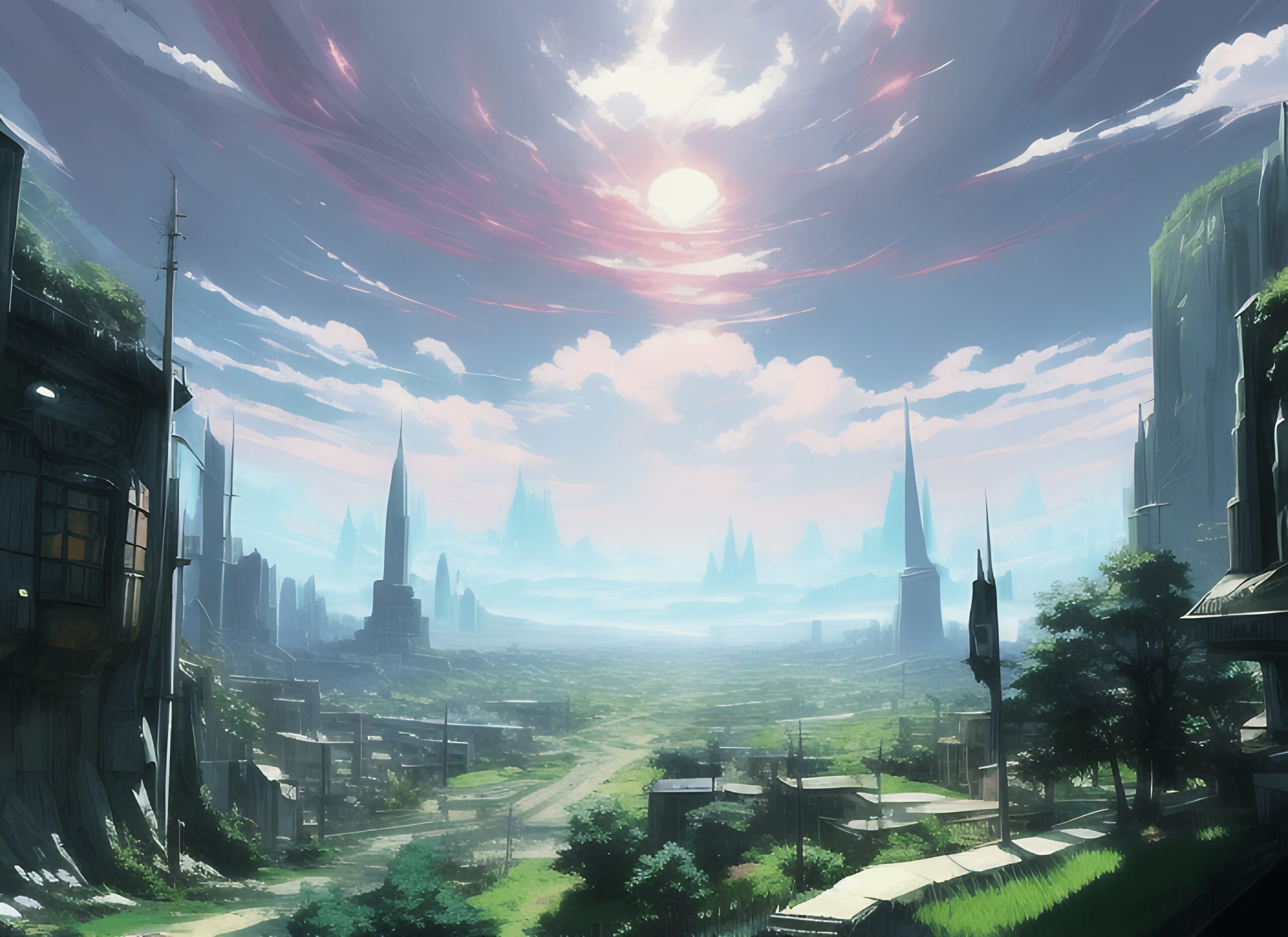
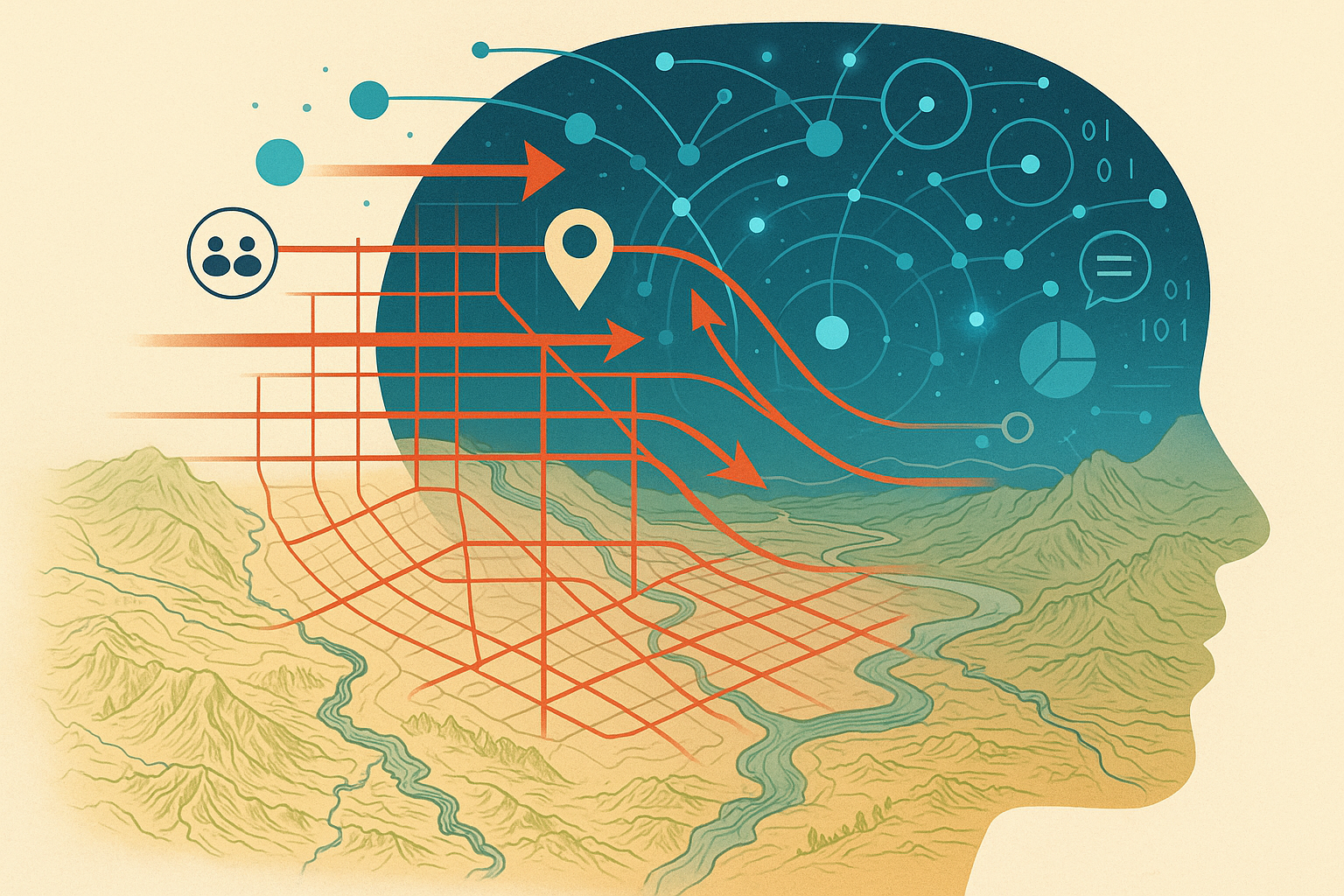
4. Reading Digital and Symbolic Territories
In the 21st century, the boundaries of space expanded.
We now exist in digital, emotional, and symbolic spaces — and geography is evolving once again.
Today’s geography asks:
- Where do we locate identity?
- How do platforms organize behavior spatially?
- What are the emotional and symbolic geographies of online life?
This contemporary geography blends:
- Digital geography: spatial patterns through apps, algorithms, geolocated data.
- Emotional geography: how space is felt, remembered, embodied.
- Symbolic geography: how identity, narratives, and ideology shape spatial imaginaries.
It moves beyond physical landscapes to examine networks, interfaces, and social imaginaries while remaining grounded in rigorous spatial inquiry.
Closing Reflection
Geography is alive. It stretches from the mountains drawn on early maps to the networks and imaginaries we navigate today. Its relevance lies not just in describing the world, but in questioning it physically, socially, and symbolically.
If you’d like to explore how geography’s evolving lenses can bring clarity to your project or organization, book a Discovery Call for a Spatial Strategy Partnership.
🧭 Continue Reading